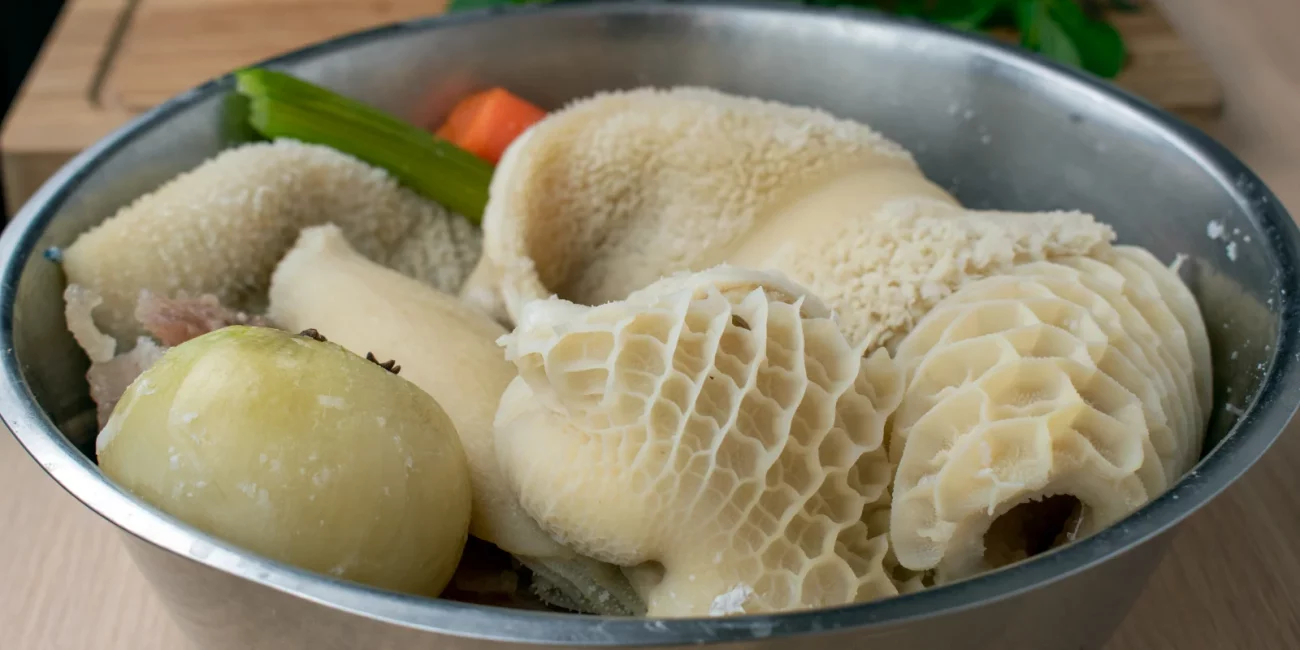
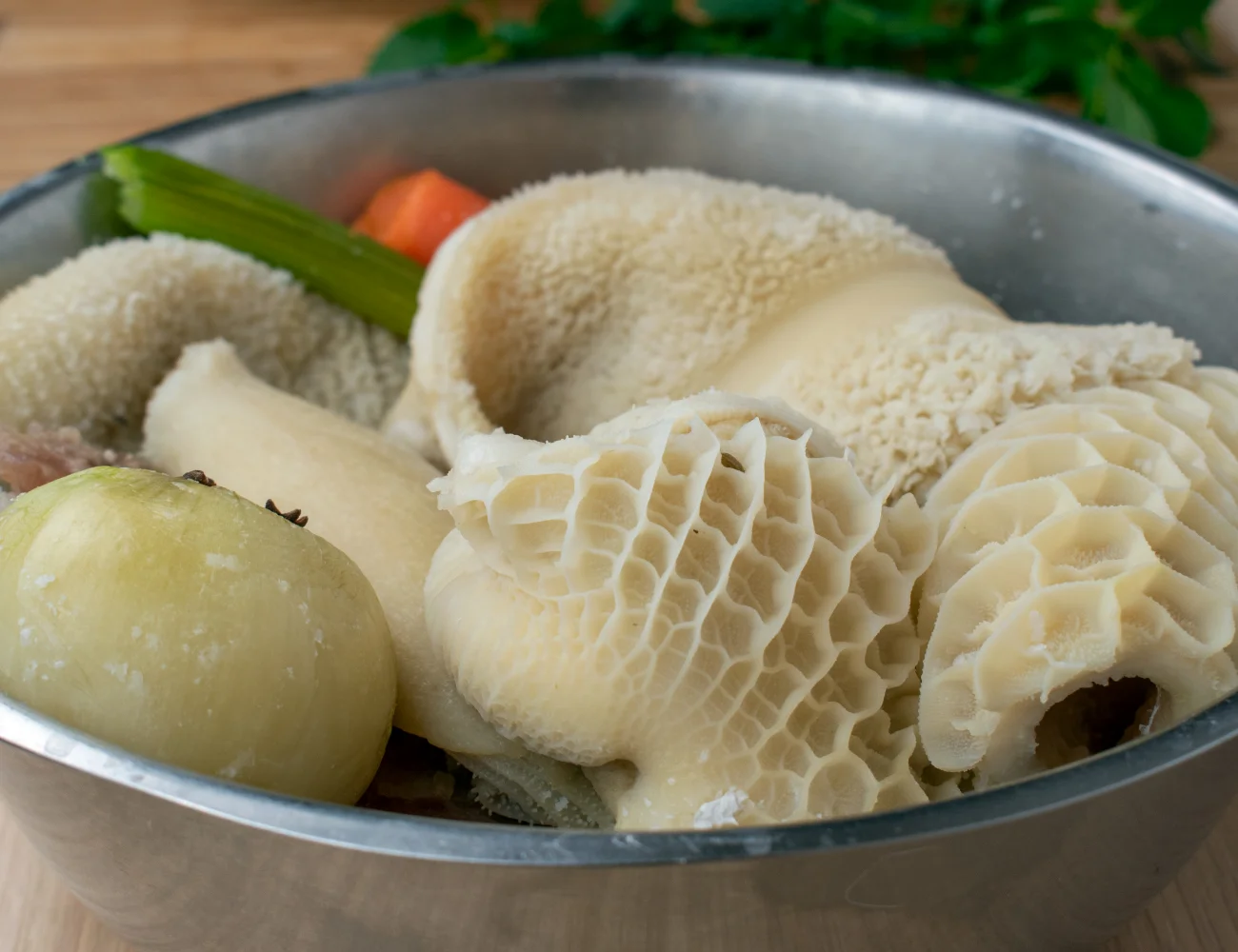
First of all, what is tripe? Tripe is a type of offal (organ meats) that is made from the stomach lining of various animals, most commonly cows. It’s a versatile ingredient that has been used in cooking worldwide due to its unique texture and flavor. In its raw form, tripe is a pale white color with a spongy texture. It’s often cleaned, blanched, and then cooked for an extended period to make it tender. Different cultures prepare tripe in various ways, such as in stews, soups, and even fried as a snack. Its distinct, somewhat neutral flavor makes it a canvas for different types of seasonings and sauces, adapting well to a variety of culinary traditions.
Tripe, an ingredient that often sparks curiosity and, sometimes, trepidation, holds a significant place in the culinary traditions of many cultures worldwide. But few have embraced this versatile ingredient as wholeheartedly as Italy has. The story of Italian tripe is a tale of resourcefulness, ingenuity, and gastronomic evolution, traversing centuries of tradition and numerous regional cuisines.
The Ancient Origins: Tripe in the Times of Rome
The tale of Italian tripe began during the time of the Romans. The ancient Romans, famed for their banquets and elaborate dishes, were no strangers to the idea of nose-to-tail eating. They utilized every part of the animal, ensuring nothing went to waste, including the stomach or the tripe. Apicius, the oldest known Roman cookbook, dating from the 4th or 5th century AD, documents dishes involving every part of the animal, including tripe, illustrating how this ingredient was a staple in Roman cuisine.
One such dish, “Minutal Matianum,” involved stewing the tripe with wine, honey, oil, and fish sauce, a common flavoring of the time. The dish, named after the gastronome Marcus Gavius Apicius, demonstrates the creative culinary uses of tripe even in these ancient times.

Middle Ages and Beyond: Tripe’s Place in Society
As we travel forward to the Middle Ages, the popularity of tripe continued. During this period, however, the use of tripe became a marker of social status. The nobility and upper classes often favored ‘noble’ meats, such as venison or wild boar (check out our Wild Boar Ragù recipe), leaving the less glamorous cuts, including tripe, for the working class and poor.
This, however, did not diminish the value of tripe in their eyes. Resourceful home cooks began developing dishes that celebrated the humble tripe, utilizing local flavors and seasonings to transform it into a dish of comfort and sustenance. The history of Italian tripe, therefore, serves as a testament to culinary resilience and creativity amidst societal and economic challenges.
Modern Italy: Regional Triumphs of Tripe
Fast forward to modern times, and Italian tripe dishes have not only survived but thrived, with variations that celebrate regional differences in flavors and cooking techniques.
In Florence, ‘Trippa alla Fiorentina‘ is a much-cherished dish. This rich and hearty stew, simmered with tomatoes and a hint of Parmigiano-Reggiano, highlights the Florentine love for simple yet flavor-packed dishes. Served in sandwich form as a ‘lampredotto’ – the local name for the fourth and final stomach of a cow – it’s a common sight at Florence’s bustling food stands.
Discover Our Cookbook!
Pasta Affair: 50 Authentic Italian Recipes
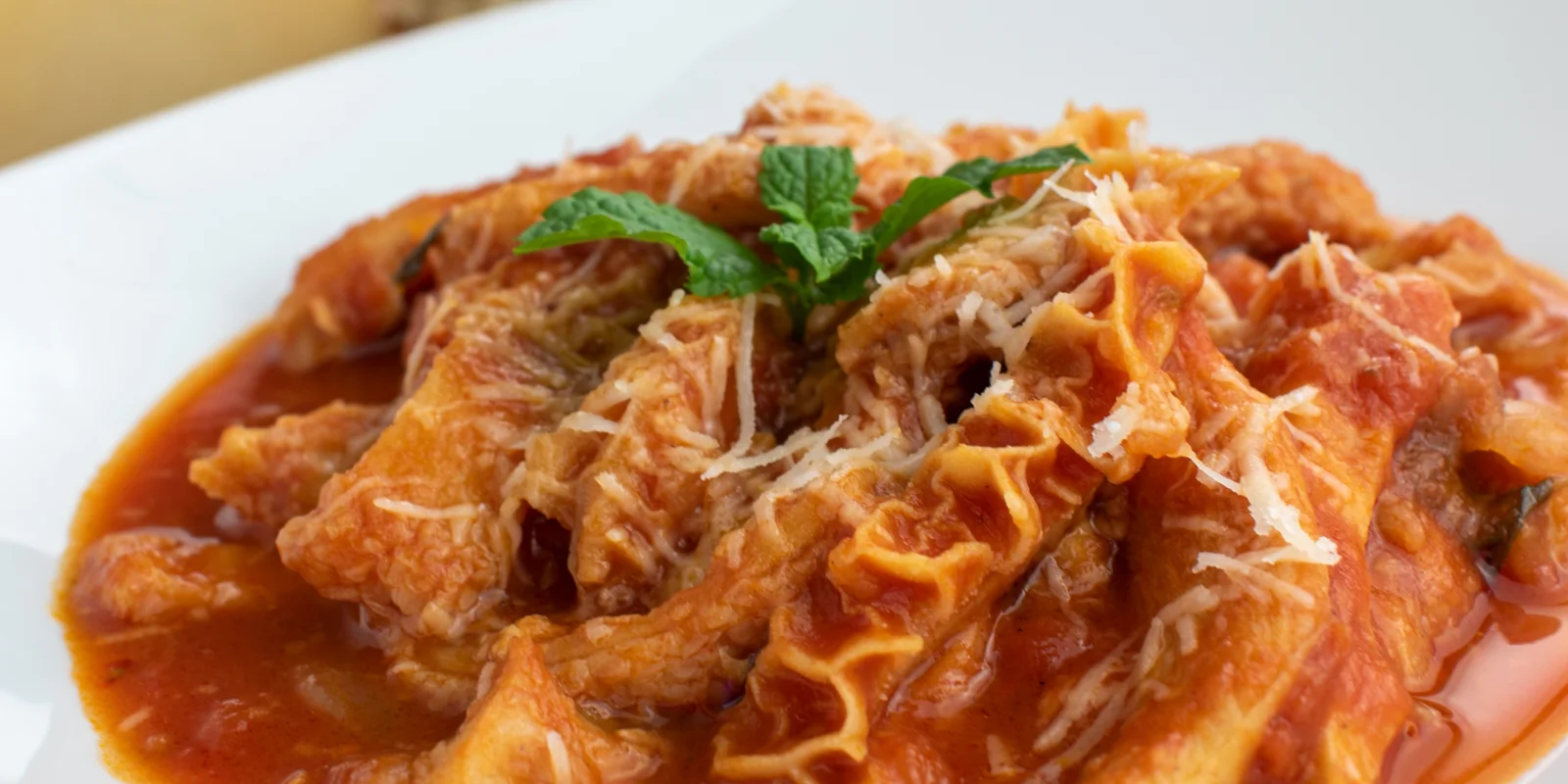
While tripe isn’t for everyone, this is the definitive Italian Tripe recipe for anyone who likes beef tripe. The sauce—with tomato, mint, white wine and pecorino cheese—is divine.
This recipe uses beef tripe parts from all three edible stomachs of the cow. Preparing tripe is not complicated—the complicated part may be finding it at a local butcher!
Tripe is extremely nutritious! It is low in fat and high in protein. In ancient times, it was a main source of nutrition for poor Italians who couldn’t afford choicer cuts of meat.
Watch the Video Recipe!
Learn how to make Italian Tripe recipe with our video recipe, filmed in Italy:
Subscribe to our YouTube Channel
More video recipes? Subscribe to our YouTube Channel (it’s FREE) and click the bell to get notifications when we release a new video recipe!
How to Make Italian Tripe
For the complete recipe for making Roman Tripe, check out the recipe card below!
What is Tripe?
Tripe is the edible stomachs of the cow. There are three, each with a different texture.
Boil it for 15 minutes.
Even if the tripe you’ve purchased is already clean, we recommend boiling it in salt water with onion, carrot and celery for 15 minutes to remove any lingering odor.
Serve with bread!
Italian Tripe is traditionally served with bread for a fantastic scarpetta (sopping up the sauce).

Best Pasta Cookbook? Ours!
Seductive strands of pasta and sumptuous sauces… Are you ready to indulge in an unforgettable Pasta Affair? This cookbook is a must-have for any serious lover of Italian food, featuring over 50 classic pasta recipes you can make at home!
AVAILABLE AS A PRINT HARDCOVER OR EBOOK
Tomato Products We Recommend
This tripe recipe calls for crushed tomatoes. In Italy, Italians have a secret for crushed tomatoes: they use or buy whole peeled tomatoes, remove the seeds and ‘water’ and then crush them with a blender or by hand. Why not just buy crushed tomatoes?
Italians know that canned crushed tomatoes tend to be less sweet than passata (purée) or whole peeled canned tomatoes. This is because skins and seeds often make their way into crushed tomato products, which produces a less sweet product.
For dishes like Roman Style Tripe (Trippa alla Romana), here in the PIATTO™ kitchen we tend to use:
To find out more about why, check out our guide on best canned tomatoes for sauce!
As an Amazon Associate, we earn from qualifying purchases. This means at no extra cost to you, PIATTO may earn a small commission if you click the links and make a qualifying purchase.
Other Italian Tripe Recipes
Check out the traditional recipe for Trippa alla Fiorentina (Florence Style Tripe) on our website!
Discover More Roman Food Recipes!
As an Amazon Associate, we earn from qualifying purchases. This means at no extra cost to you, PIATTO may earn a small commission if you click the links and make a qualifying purchase.
Italian Tripe Recipe – Trippa alla Romana
Ingredients
- 2.2 lb beef tripe cleaned
- 1 onion for pre-cooking the tripe
- 1 carrot for pre-cooking the tripe
- 1 rib celery for pre-cooking the tripe
- 1 onion chopped
- ½ carrot chopped
- 1 rib celery chopped
- 28 oz crushed tomatoes
- handful fresh mint minced
- 4 tbsp pecorino romano cheese finely grated
- ½ cup dry white wine
- 4 tbsp olive oil or as needed
- fresh chili peppers to taste
- fine salt to taste
- black pepper to taste
Instructions
Pre-Cook the Tripe
- Boil the tripe for 15 minutes in salted water with a whole onion, carrot and celery to remove the last of the odor. Drain and set aside.
Sauté the Tripe
- Coat the bottom of a skillet generously with olive oil. Sauté the chopped onion, carrot and celery over medium-low heat until the onions start to appear translucent.
- Add the tripe to the vegetables and salt and pepper to taste. Cook for a few minutes over medium heat.
- Add a ½ cup of white wine. Stir, and cook until the wine has evaporated.
Make the Sauce
- Add crushed tomato and a 1 1/2 cups of water to the tripe.
- Bring the sauce to a boil. Add a handful of fresh mint and a pinch of salt.
- Cover and cook the tripe in the sauce over medium-low heat for 2 hours.
Finish with Pecorino Cheese
- After the two hours, turn off the heat and add about 4 Tbs of freshly grated Pecorino Romano cheese. Stir to melt the cheese. Feel free to top with more pecorino when you serve the dish.
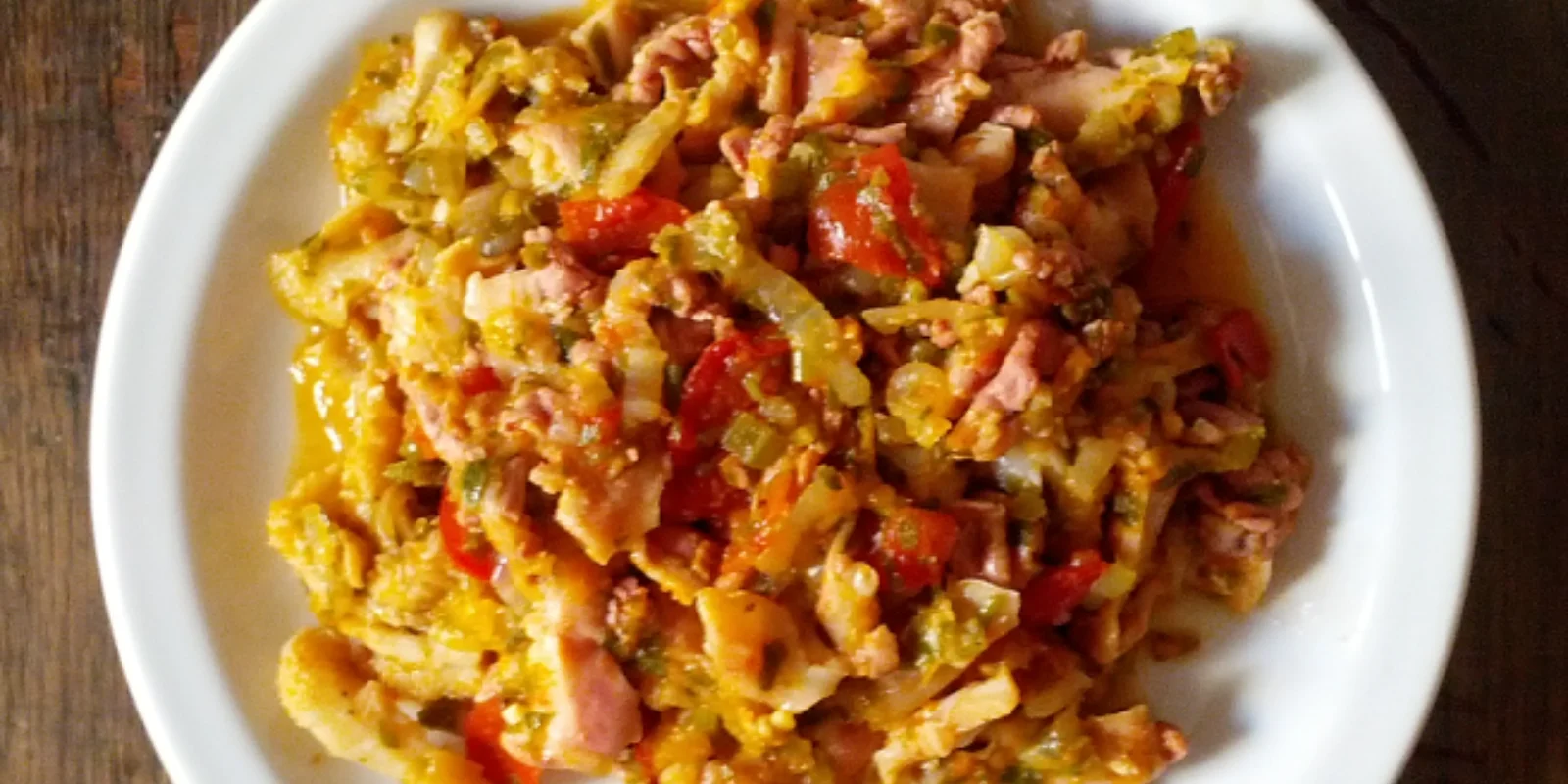

In the Piedmont region, ‘Trippa alla Piemontese‘ is another testament to the enduring love for tripe. This dish features tripe slow-cooked in a robust mixture of red wine, vegetables, and herbs, echoing the region’s rich gastronomic landscape.
Heading south to Naples, ‘Trippa Napoletana‘ takes the stage. This Neapolitan preparation sees tripe cooked with a variety of local ingredients, including tomatoes, garlic, and chili pepper, reflecting the region’s preference for bold, zesty flavors.
The Eternal City’s Culinary Gem: Trippa alla Romana
No discussion of Italian tripe would be complete without focusing on the Italian tripe recipe called ‘Trippa alla Romana,’ a signature dish from Rome, which best exemplifies the enduring love Italians have for this humble offal.
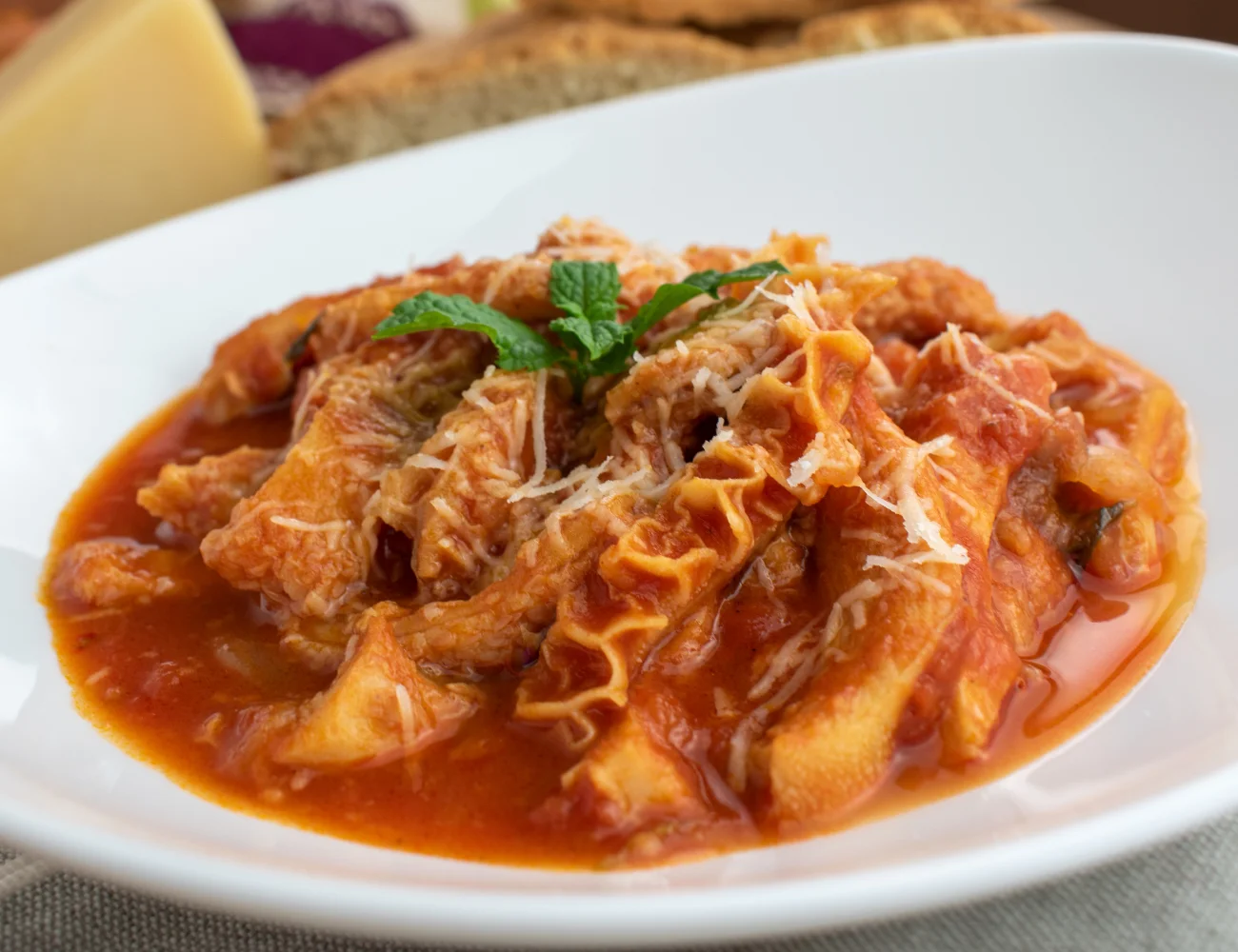
Trippa alla Romana (Roman-style Tripe) is a rich, hearty stew, characterized by its slow-cooked tripe immersed in a vibrant tomato sauce. Mint and pecorino cheese—two distinctly Roman ingredients—lend a unique touch to this regional variant. They add a refreshing contrast to the dish, balancing the richness of the tripe and the sweetness of the tomato sauce.
To prepare Trippa alla Romana, the tripe is thoroughly cleaned, boiled, and then cut into thin strips or small squares. It’s then slow-cooked in a flavorful tomato sauce enriched with onions, carrots, celery, and a splash of white wine. This mixture is left to simmer until the tripe becomes tender and absorbs the aromatic flavors of the sauce. The final touch is a scattering of freshly chopped mint and a generous sprinkle of pecorino romano cheese.
Trippa alla Romana holds a special place in the hearts of Romans. It’s not just a dish; it’s a testament to Rome’s historical and cultural identity, a cherished connection to the past that continues to be celebrated in the city’s trattorias and family homes. It reflects the Roman ethos of ‘quinto quarto’ (the fifth quarter), a philosophy centered around nose-to-tail eating, demonstrating respect for the animal by ensuring nothing goes to waste.
Conclusion: The Legacy of Italian Tripe
Today, the legacy of Italian tripe remains strong, a testament to its long, rich history. Its story tells of culinary resourcefulness and the power of food to transcend social classes. Whether stewed, fried, or served in a sandwich, tripe continues to be a celebrated part of Italian cuisine, a tangible link to the country’s gastronomic past, and an example of how a humble ingredient can create culinary magic. So, next time you spot tripe on a menu or in a market, remember, you’re not just looking at a piece of offal – you’re looking at centuries of culinary history and tradition, a tradition that’s very much alive in the heart of Italy.