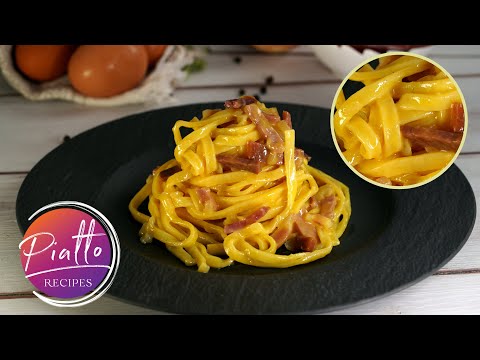
Ever wonder where Italian restaurants abroad got the idea to add onions into Pasta Carbonara? While onions are absolutely not traditional in the authentic Spaghetti Carbonara recipe, it is traditional in another traditional pasta dish: Fettuccine alla Papalina! Keep reading to learn how to make the legendary Papalina Pasta recipe. Fun fact: Fettuccine alla Papalina translates to ‘Pope’s Fettuccine‘ in Italian!
Watch the Video Recipe!
Prefer to watch the video recipe for Papalina Pasta? Click on the video below:
Subscribe to our YouTube Channel
More video recipes? Subscribe to our YouTube Channel (it’s FREE) and click the bell to get notifications when we release a new video recipe!
In Italian? Fettuccine alla Papalina Ricetta Originale
Discover Our Cookbook!
Pasta Affair: 50 Authentic Italian Recipes
While tripe isn’t for everyone, this is the definitive Italian Tripe recipe for anyone who likes beef tripe. The sauce—with tomato, mint, white wine and pecorino cheese—is divine.
This recipe uses beef tripe parts from all three edible stomachs of the cow. Preparing tripe is not complicated—the complicated part may be finding it at a local butcher!
Tripe is extremely nutritious! It is low in fat and high in protein. In ancient times, it was a main source of nutrition for poor Italians who couldn’t afford choicer cuts of meat.
Watch the Video Recipe!
Learn how to make Italian Tripe recipe with our video recipe, filmed in Italy:

Subscribe to our YouTube Channel
More video recipes? Subscribe to our YouTube Channel (it’s FREE) and click the bell to get notifications when we release a new video recipe!
How to Make Italian Tripe
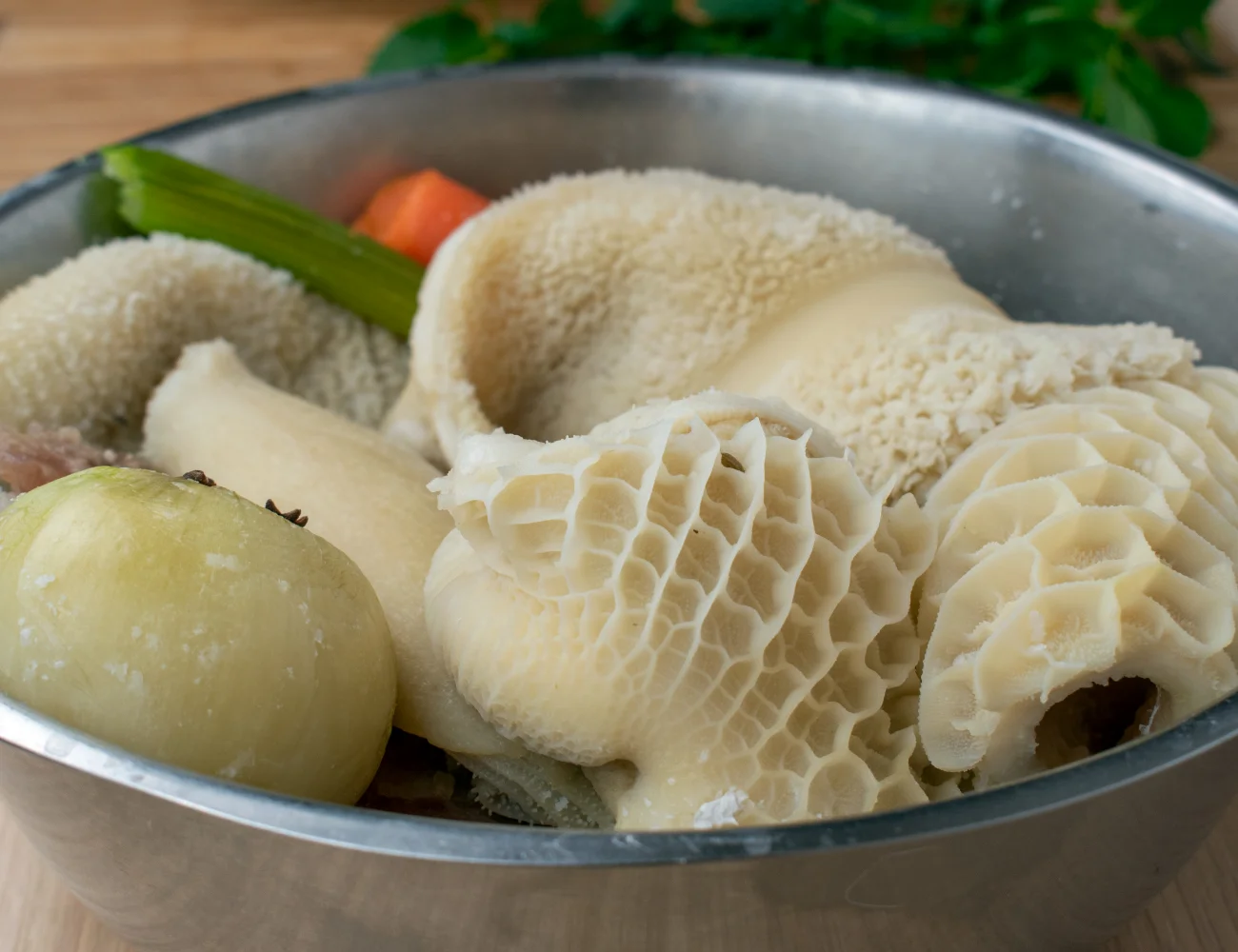
For the complete recipe for making Roman Tripe, check out the recipe card below!
What is Tripe?
Tripe is the edible stomachs of the cow. There are three, each with a different texture.
Boil it for 15 minutes.
Even if the tripe you’ve purchased is already clean, we recommend boiling it in salt water with onion, carrot and celery for 15 minutes to remove any lingering odor.
Serve with bread!
Italian Tripe is traditionally served with bread for a fantastic scarpetta (sopping up the sauce).
Best Pasta Cookbook? Ours!
Seductive strands of pasta and sumptuous sauces… Are you ready to indulge in an unforgettable Pasta Affair? This cookbook is a must-have for any serious lover of Italian food, featuring over 50 classic pasta recipes you can make at home!
AVAILABLE AS A PRINT HARDCOVER OR EBOOK
Tomato Products We Recommend
This tripe recipe calls for crushed tomatoes. In Italy, Italians have a secret for crushed tomatoes: they use or buy whole peeled tomatoes, remove the seeds and ‘water’ and then crush them with a blender or by hand. Why not just buy crushed tomatoes?
Italians know that canned crushed tomatoes tend to be less sweet than passata (purée) or whole peeled canned tomatoes. This is because skins and seeds often make their way into crushed tomato products, which produces a less sweet product.
For dishes like Roman Style Tripe (Trippa alla Romana), here in the PIATTO™ kitchen we tend to use:
To find out more about why, check out our guide on best canned tomatoes for sauce!
As an Amazon Associate, we earn from qualifying purchases. This means at no extra cost to you, PIATTO may earn a small commission if you click the links and make a qualifying purchase.
Other Italian Tripe Recipes
Check out the traditional recipe for Trippa alla Fiorentina (Florence Style Tripe) on our website!
Discover More Roman Food Recipes!
As an Amazon Associate, we earn from qualifying purchases. This means at no extra cost to you, PIATTO may earn a small commission if you click the links and make a qualifying purchase.
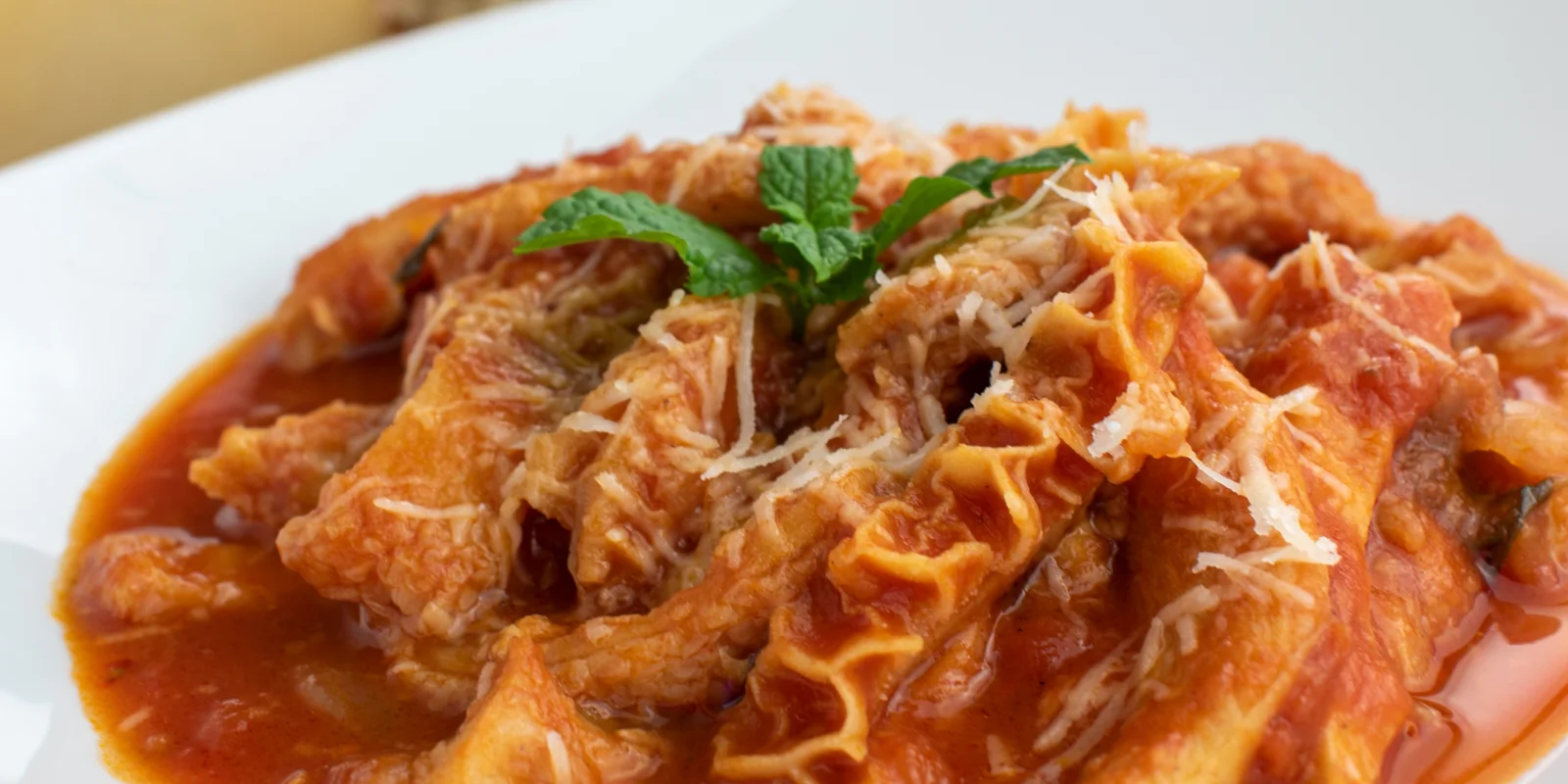
Italian Tripe Recipe – Trippa alla Romana
Ingredients
- 2.2 lb beef tripe cleaned
- 1 onion for pre-cooking the tripe
- 1 carrot for pre-cooking the tripe
- 1 rib celery for pre-cooking the tripe
- 1 onion chopped
- ½ carrot chopped
- 1 rib celery chopped
- 28 oz crushed tomatoes
- handful fresh mint minced
- 4 tbsp pecorino romano cheese finely grated
- ½ cup dry white wine
- 4 tbsp olive oil or as needed
- fresh chili peppers to taste
- fine salt to taste
- black pepper to taste
Instructions
Pre-Cook the Tripe
- Boil the tripe for 15 minutes in salted water with a whole onion, carrot and celery to remove the last of the odor. Drain and set aside.
Sauté the Tripe
- Coat the bottom of a skillet generously with olive oil. Sauté the chopped onion, carrot and celery over medium-low heat until the onions start to appear translucent.
- Add the tripe to the vegetables and salt and pepper to taste. Cook for a few minutes over medium heat.
- Add a ½ cup of white wine. Stir, and cook until the wine has evaporated.
Make the Sauce
- Add crushed tomato and a 1 1/2 cups of water to the tripe.
- Bring the sauce to a boil. Add a handful of fresh mint and a pinch of salt.
- Cover and cook the tripe in the sauce over medium-low heat for 2 hours.
Finish with Pecorino Cheese
- After the two hours, turn off the heat and add about 4 Tbs of freshly grated Pecorino Romano cheese. Stir to melt the cheese. Feel free to top with more pecorino when you serve the dish.
Video
Nutrition
Papalina Pasta: the Legend
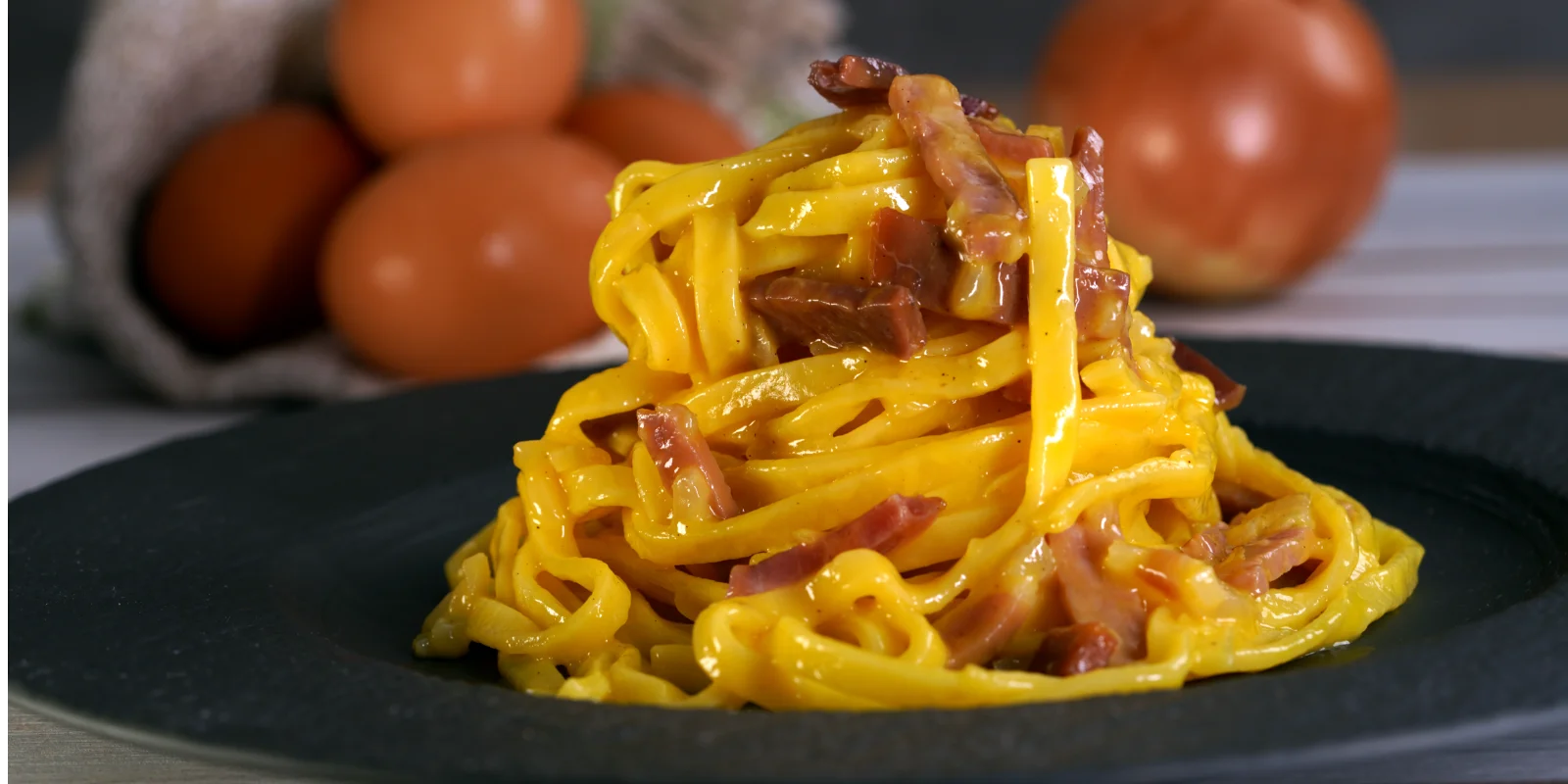
Fettuccine alla Papalina was a dish that was allegedly invented to feed Pope Pius XII’s request for a ‘lighter’ and more refined version of the traditional Spaghetti Carbonara recipe. Papalina pasta has:
- a creamy egg and cheese sauce
- prosciutto (instead of the guanciale or pancetta found in traditional Carbonara)
- Parmigiano Reggiano cheese ( instead of the pecorino cheese found in Carbonara)
- onions and butter (not in a traditional Carbonara at all!)
In our opinion, the traditional Papalina Pasta recipe is definitely not ‘lighter’ (hello: butter), but it is certainly gourmet! It is delicious and it is serious comfort food.
How to Make Papalina Pasta

Sauté the Onion in Butter, Add Prosciutto
To make this dish, we start by sautéing minced onions in butter— with a ladle of hot pasta water.
Once the onion is translucent, we add prosciutto. For Papalina pasta, we need thick slices of prosciutto—cut into strips. The thickness of the prosciutto should be about 1/4 inch (1/2 a centimeter). One slice of our prosciutto weighed around 4 ounces (120 grams).

The prosciutto in this pasta recipe is cooked just to heat it and to lend its flavor to the butter and onions. We don’t need to make the prosciutto crispy, as we would with guanciale in a traditional Spaghetti Carbonara.
Prepare the Creamy Egg Sauce

Papalina Pasta is often thought of as a ‘Carbonara’ with prosciutto, onions and butter because it does have an egg sauce that is similar to an authentic Spaghetti Carbonara recipe.
For the Papalina Pasta sauce, we follow our traditional Carbonara recipe:
- one egg yolk per person
- plus a whole egg for the pan
To create the egg and cheese sauce, we start by just mixing the cheese with the egg.
While pecorino cheese is traditional for Spaghetti Carbonara, finely grated Parmigiano Reggiano cheese is mixed with the egg to make Papalina Pasta sauce. For the best flavor, freshly grate the cheese. We’ll also need a bit of hot pasta water for our egg sauce, but first we need to….
Cook the Pasta
The pasta traditionally served with Papalina Pasta is fettuccine!
For this dish, we cook the fresh fettuccine almost entirely in the pot. This is in contrast to some other Roman pasta recipes like Spaghetti Cacio e Pepe, in which the pasta is only partially cooked in a pot and then transferred to a skillet and finished in a sauce or infused water.
Fresh Fettuccine Cooks Quickly!
Fresh fettuccine requires only two to three minutes to cook. Add less salt to the pasta water than you normally would—to account for the fact that prosciutto is quite salty and will add salt to the finished dish.
Finish the Pasta with Sauce
While the pasta is cooking, we slowly add a little less than a ladle of hot pasta water to the egg and cheese—mixing continuously! This will help the egg and cheese to bind together. By adding the water slowly a bit at a time and mixing constantly, we prevent the eggs from reaching a temperature at which they would coagulate. We don’t want a clumpy egg sauce!
When the fettuccine is al dente, strain it and add it to the onion/butter/prosciutto in the skillet. After mixing to combine the pasta with these ingredients, remove the skillet from the heat and add the egg sauce—off the heat!
Eggs begin to coagulate at a temperature of about 63 degrees Celsius (145 degrees Fahrenheit)— so it’s important not to cook the eggs over direct heat.
Tips for Making this Papalina Pasta Recipe
Salt the Pasta Water Less!
Salt the pasta water less than you would normally for cooking Italian pasta. Why? Both prosciutto and Parmigiano cheese are quite salty. Taste the finished pasta and add more salt if needed at that time.
Add Egg Sauce off the Heat!
Eggs can coagulate quite quickly over a heat source. Carbonara sauces (like this one) should always be added off the heat to avoid making clumpy sauce.
Carbonara: Frequently Asked Questions
Are the eggs in Carbonara sauces safe to eat?
Eggs that aren’t thoroughly cooked do carry the risk of foodborne illness like salmonella.
The FDA recommends heating eggs to a temperature of 160° F in order to be safe from foodborne illness. This is tough to do in a carbonara sauce manually without cooking the eggs—and ending up with clumpy sauce.
However, if you use a sous vide or another machine that can continuously whisk the eggs while maintaining a specific temperature, it can be done. We’ll address this technique in another post.
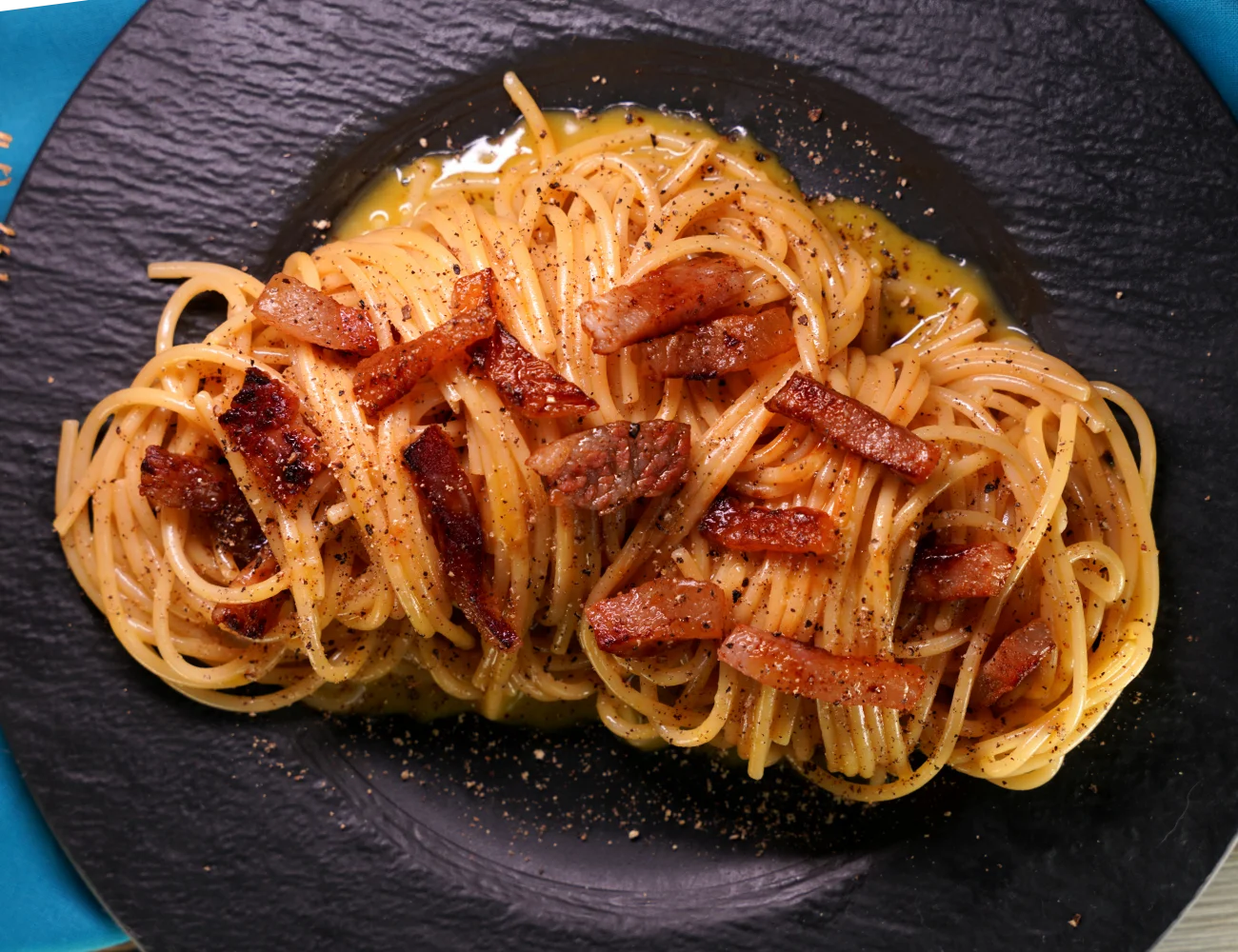
How is an Authentic Italian Carbonara Recipe Prepared?
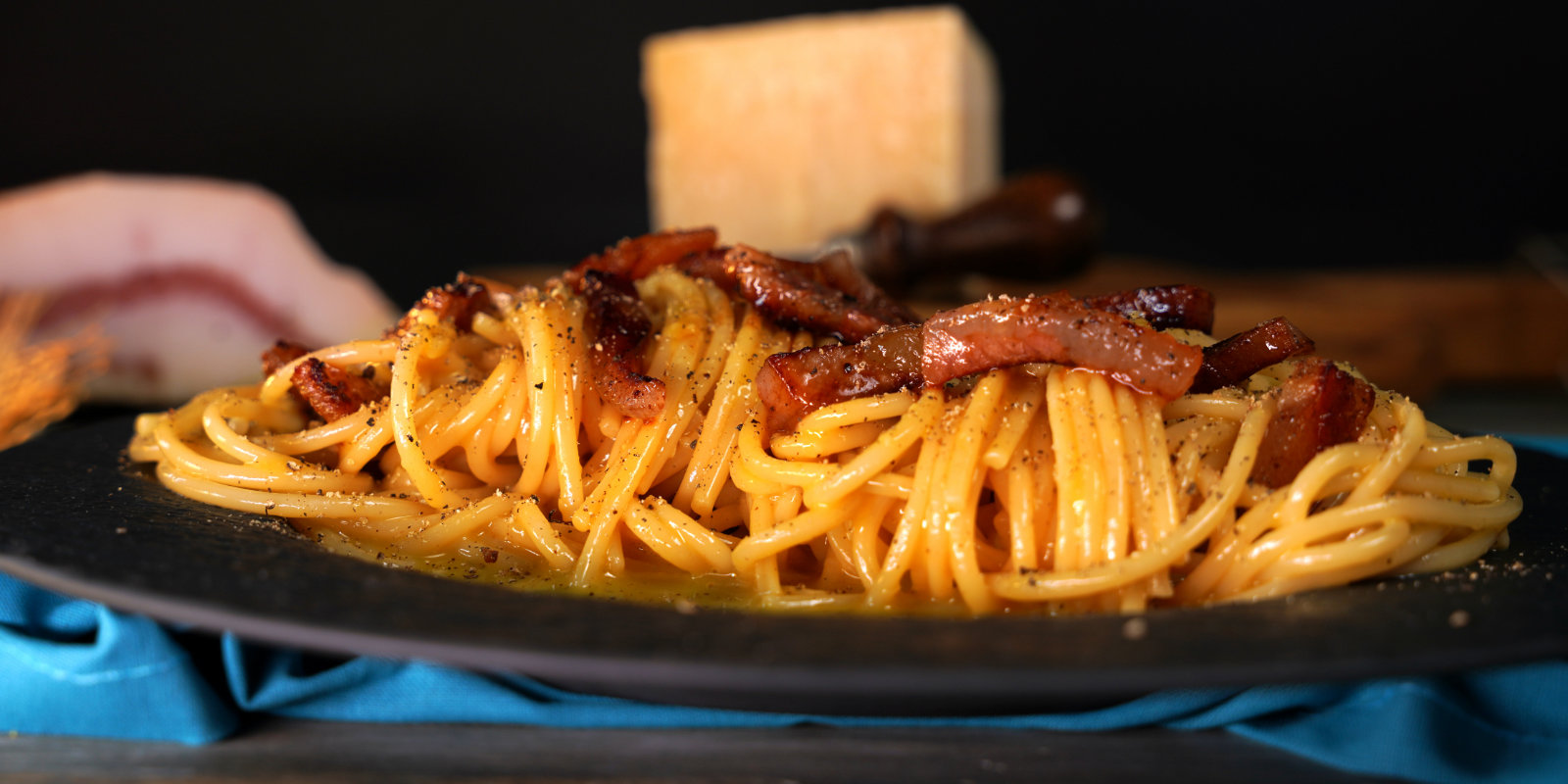
You are looking for this Spaghetti Carbonara recipe —considered traditional in Italy today!
Is there a Spaghetti Carbonara with Cream and Bacon?
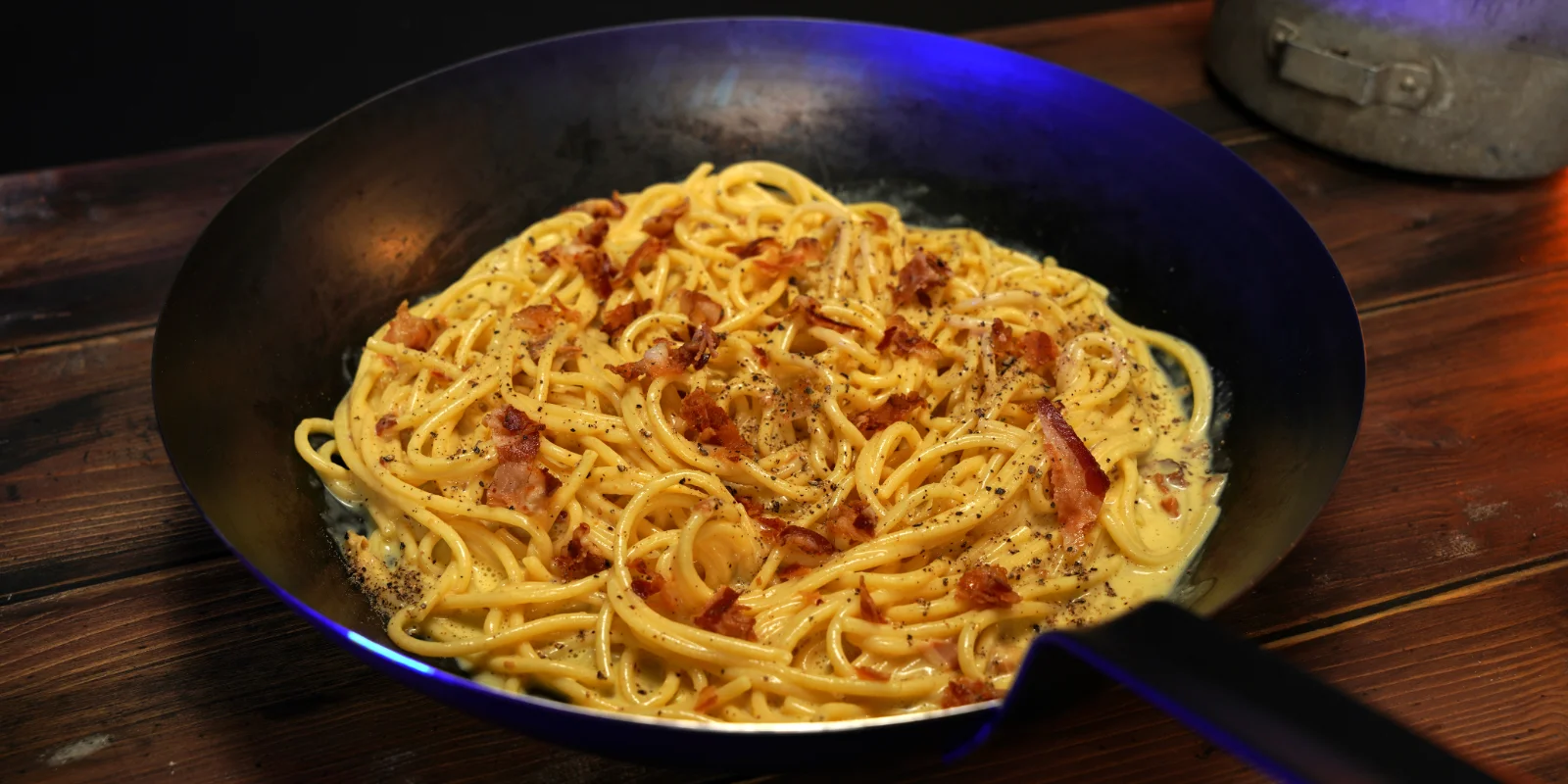
If the Carbonara recipes that you love have American bacon and cream, you are probably looking for something like the WWII Spaghetti Carbonara recipe!
This ‘American-style’ Carbonara is in fact one of the origin stories for Carbonara, and we have re-created the recipe for you using the memoirs of the Italian Chef who said he invented it!
Discover More Cheesy Italian Food Recipes
As an Amazon Associate, we earn from qualifying purchases. This means at no extra cost to you, PIATTO may earn a small commission if you click the links and make a qualifying purchase.
Papalina Pasta Recipe
Equipment
- 1 stock pot for cooking the pasta
- 1 large skillet or pan
Ingredients
- 1 onion minced
- 7 oz prosciutto thick slices, cut into strips
- 3 tbsp butter
- 4 egg yolks
- 1 whole egg
- 3 oz Parmigiano Reggiano cheese finely grated
- 1 tsp black pepper freshly ground
- 1 pinch fine salt or to taste
- 14 oz fettuccine pasta
Instructions
Prepare the Ingredients
- Mince the onion.
- Cut the thick prosciutto slices into strips. Finely grate the Parmigiano cheese, if it is not already.
Prepare the Egg Sauce
- Combine the egg yolks and whole egg with: the black pepper, finely grated Parmigiano cheese and a pinch of salt. Mix until smooth. Set aside.4 egg yolks, 1 whole egg, 1 tsp black pepper, 1 pinch fine salt, 3 oz Parmigiano Reggiano cheese
Heat the Pasta Water
- Bring the water for the pasta to a gentle boil. We need the hot water for the next step. However, fettuccine pasta cooks quickly so don’t start cooking it yet. In the meantime…
Sauté the Onions and Prosciutto
- Melt the butter in a large skillet. Add the minced onion and a ladle of hot pasta water. Cook the onion over medium heat until translucent and tender.3 tbsp butter, 1 onion
- Then, add the strips of prosciutto to the pan as well and mix them with the onion. In the meantime…7 oz prosciutto
Cook the Pasta
- Cook the fettuccine in lightly salted, boiling water according to package instructions for al dente pasta. Fresh fettuccine cooks in 2-3 minutes.Add less coarse salt to the pasta water than usual because both the Parmigiano Cheese and the prosciutto are quite salty.14 oz fettuccine pasta
Finish the Pasta
- Add a little less than a ladle of hot pasta water to the egg sauce. Drizzle the water in slowly and mix continuously to prevent clumping. The eggs will be liquid-y and smooth.
- Add the drained, cooked fettuccine to the skillet and mix to combine. Remove the skillet from the heat and quickly stir in all of the egg sauce.
- Serve immediately and buon appetito!
Video
🇬🇧 This is the English-language version of our original Italian recipe on PIATTO Ricette.
“spettacolare”
“Bravo. Ben fatto.”
“Piatto Sublime. Se posso… troppa/issima cipolla! 😉
“perfetto !
grazie”
“Che spettacolo! le voglio rifare”
“Wow!! Increíble!!”
“👏👏👏👏👏🇮🇹🇮🇹”
“Love it ❤️”
“Wowww this recipe looks so delicious, thank you for sharing this with us”
“Complimenti per questa ricetta, si presenta benissimo da provare sicuramente !!”
“Mi è piaciuto lo sprezzo con cui ti sei riferito a piselli e panna ahahah”
“Papalina duodecima, n’ho l’acqua al bocca 😛”
“Ricetta fantastica, e anche con una connotazione storica. Mi permetto di fare un piccolo appunto: va precisato il dettaglio importante che il battuto d’uovo va aggiunto a fuoco già spento, proprio per evitare che l’alta temperatura porti alla coagulazione che poi dà un effetto tipo frittata o uovo strapazzato.”
“Bravo! Finalmente la ricetta originale condita dalla storia originale!”
“Buonissime davvero 🙂”
@PiattoRecipes – oh my goodness! I think I’ve just found my new favourite pasta dish! ☺️👍🥰😋😋 FYI, my previous favourite was Carbonara ☺️🤭
Original comment: View on YouTube
German Chef here.Our Eggs here are mostly very fresh but not treated with any Chemicals or Chlorine. When separating the Yolk from the White, i never use the 2 half-Shells-Technique because Shells are where the Salmonella is. I always pour the whole Egg into my Hand (of course freshly washed and cleaned!) after cracking it open and let the white slide through my fingers into a container, while the Yolk dont fit through and can be put into another Container. This Way of Separation reduces the Contact of the Inner Egg with the potential contaminated Outside of the Shell and i never had any Problems with Salmonella in 25Years! I dont know your US Eggs and their Level of Contamination but as said, i never had any Problems when used raw Eggyolk or White (for real Mousse au Chocolat for Example). Problems always come from old Eggs.
Original comment: View on YouTube
”I would like a lighter dish.” There you go, extra rich!
Original comment: View on YouTube
must try!!!
Original comment: View on YouTube
Thank you, I was always dreaming that onion would be a great addition to carbonara, but here is the way. I wonder whether prosciutto can be replaced for guanciale.
Original comment: View on YouTube
Good it is delicious
Original comment: View on YouTube
Come sempre, gli italiani devono fare di tutto un’arte. Questa ricetta è assolutamente maestosa.
Original comment: View on YouTube
Grande Papà …ultimamente c’è stata una grande caduta di stile la curia romana era grande anche a tavola
Original comment: View on YouTube
Super Rezept, gerade nachgekocht!!
Original comment: View on YouTube
Fettuccine dei “sedevacantisti”….cioe’ quelli che sostengono che l’ultimo papa vero sia stato Pio XII
Original comment: View on YouTube
Buonissimo da provare per credere 😋
Original comment: View on YouTube
Il problema di questo tipo di formaggio è che al minimo aumento della temperatura diventa filante. Personalmente non mi piacciono le uova che colano, motivo per cui preferisco la carbonara a causa dell’alto contenuto di grassi.
Original comment: View on YouTube
Dici di no meter pipiselli, ma cos’e? Non ho trovato la traduzione in francese.
Original comment: View on YouTube
Grande video molto accurato e con riprese di alto livello.👍👍👍
Original comment: View on YouTube
Questa non la conoscevo ecco perché molti fanno la carbonara vera con il parmigiano il burro fanno i saputelli e fanno un misto delle due carbonare grazie di questa storia che ci ha spiegato così bene
Original comment: View on YouTube
che spettacolo
Original comment: View on YouTube
i vostri video sono fantastici! Bravissimi!!!!
Original comment: View on YouTube
Se è vero che il cardinale Pacelli abbia richiesto una pasta diversa dal solito, significa che siamo negli anni ’30. Tracce di Carbonara in quel periodo: zero. Non pervenuta.Quindi più probabile,al limite, il contrario. Che sia stata la papalina ad ispirare la Carbonara. Se proprio vogliamo trovare un’attinenza ad un altro piatto, perché non citare le tanto bistrattate Fettuccine di Alfredo di Lelio? Già solidamente presenti a Roma da almeno 20 anni ( nascono nel 1908) e con due ingredienti della papalina: burro e parmigiano.
Original comment: View on YouTube
Mi sembra una di quelle paste che fanno all’estero dove ci vuole un fegato nuovo dopo averla mangiata…
Original comment: View on YouTube
Spettacolari! Le proverò immediatamente
Original comment: View on YouTube
Hai capito Pio XII
Original comment: View on YouTube
Anche se Poi 12° era un pezzo de M€rD@ la ricetta è fantastica, mi sono iscritto.
Original comment: View on YouTube
Bravo, chiaro efficace semplice.
Original comment: View on YouTube
Lo stesso Papa cui si deve l’adattamento del ragout francese alla pasta asciutta, che divenne cosi ragù bolognese (Pio VII era vescovo di Imola (Bologna) prima di diventare papa.
Original comment: View on YouTube
💚🤍♥️
Original comment: View on YouTube
questa è la vera papalina tradizionle ma quella farlocca con prosciutto cotto e piselli è più buona
Original comment: View on YouTube
Sti Papi erano proprio capricciosi, in senso buono naturalmente, io per esempio ho voluto provare, invece del guanciale o del prosciutto, uno speck affumicato che ha dato un gusto tutto particolare alla mia carbonara. Comunque complimenti perché sei molto bravo .
Original comment: View on YouTube
► La ricetta con tutte le istruzioni, sul nostro sito: https://piattoricette.it/fettuccine-alla-papalina-ricetta/ENGLISH?► Watch the AD-FREE version of this video (and more)? Support us on Patreon🥰: https://www.patreon.com/piatto► WRITTEN RECIPE? On our website: https://www.piattorecipes.com/papalina-pasta-recipe-carbonara-with-onions-prosciutto-and-parmigiano/
Original comment: View on YouTube
Che delizia questa ricetta 😀
Original comment: View on YouTube
Molto invitante…..concordo su niente panna e piselli! Da provare presto… però non puoi commentare alla fine con il boccone in bocca che stai godendo…non vale!!! 😂 Iscritta subito mi piace molto il vostro canale baci romani 💛❤️
Original comment: View on YouTube
Pope Pius XII was a bad man and a bad pope. He disgraced the Church. I would not want to eat a dish named after him.
Original comment: View on YouTube
Se fatta dentro le mura vaticane panna e piselli é di rigore
Original comment: View on YouTube
Ha sostituito il guanciale con del burro e prosciutto crudo. Ottima maNon più leggera
Original comment: View on YouTube
Bellezza
Original comment: View on YouTube
Fantastico
Original comment: View on YouTube
Questa pappa è tanto buona! 🔝⭐⭐⭐⭐⭐🫶 Grazie
Original comment: View on YouTube
I have a hard time finding guanciale or pancetta where I live so this is definitely a good alternative.
Original comment: View on YouTube
La possiamo chiamare una rivisitazione della carbonara , proprio perché nella carbonara assolutamente non ci va la cipolla
Original comment: View on YouTube
Bravissimo….💯👍👍😋😋
Original comment: View on YouTube
Bravo! Finalmente la ricetta originale condita dalla storia originale!
Original comment: View on YouTube
Nn sono affatto d accordo con il prosciutto e la panna
Original comment: View on YouTube
Buonissime davvero 🙂
Original comment: View on YouTube
Non c’è il rischio che risulti lo stesso un piatto pesante visto che ci sono le fettuccine (che sono fatte con l’uovo) e le uova aggiunte alla fine ?
Original comment: View on YouTube
Ricetta fantastica, e anche con una connotazione storica. Mi permetto di fare un piccolo appunto: va precisato il dettaglio importante che il battuto d’uovo va aggiunto a fuoco già spento, proprio per evitare che l’alta temperatura porti alla coagulazione che poi dà un effetto tipo frittata o uovo strapazzato.
Original comment: View on YouTube
Papalina duodecima, n’ho l’acqua al bocca 😛
Original comment: View on YouTube
Salve ottima ricetta, sai consigliarmi il vino da abbinare?
Original comment: View on YouTube
I’ll try it. Looking forward to compare with Carbonara!
Original comment: View on YouTube
Mi ricorda la carbonara su un libro di Ada Boni
Original comment: View on YouTube
Mi è piaciuto lo sprezzo con cui ti sei riferito a piselli e panna ahahah
Original comment: View on YouTube
la carbonara non esisteva neanche a quell’epoca
Original comment: View on YouTube
Panna e cipolla sono pienamente giustificate dalla “raffinazione” richiesta dal Papa, specialmente in un’epoca dove la cucina francese era ancora vista come l’avanguardia culinaria
Original comment: View on YouTube
Che bontà deliziosa!!! Sbaglio o lo Chef è mancino? ☺️
Original comment: View on YouTube
Love it ❤️
Original comment: View on YouTube
Türkçe alt yazı lütfen
Original comment: View on YouTube
Wowww this recipe looks so delicious, thank you for sharing this with us
Original comment: View on YouTube
Comunque non può assomigliare alla carbonara perchè qui c’è la cipolla con il prosciutto bisogna stare attenti perchè cotto tira fuori molto sale
Original comment: View on YouTube
looks nice, but the meat is going to be tough
Original comment: View on YouTube
Qual’è la differenza con la carbonara?
Original comment: View on YouTube
Bel video… ma perché li fate così lunghi?
Original comment: View on YouTube
Ciao per due persone che dosi di uova?grazie
Original comment: View on YouTube
Complimenti per questa ricetta, si presenta benissimo da provare sicuramente !!
Original comment: View on YouTube
So delicious and tempting🥰
Original comment: View on YouTube
Il papa voleva una versione della carbonara più leggera….cipolla soffritta nel burro… Oooook
Original comment: View on YouTube
Troppa acqua di cottura per i miei gusti si vede benissimo che la cremina diventa annacquata non vellutata, poi saranno gusti😅
Original comment: View on YouTube
Al di là dell’evidente incremento del costo del piatto, rispetto alla carbonara classica, mi permetto di sottolineare e quindi suggerire, un uso davvero limitato del prosciutto crudo, perché la componente di sale che rilascia il salume (a differenza del guanciale) quando viene cotto è altissima e spesso poco ‘governabile’… una quantità troppo presente nel piatto lo rende decisamente sgradevole.
Original comment: View on YouTube
Que buena receta,esta me la apunto para probarla 👍👍 ya te contaré que tal me sale un saludo desde COCINA CON PATRICK 🍅🍅🥑
Original comment: View on YouTube
면만…..준비하면..베이컨으로…하면될것 같은데…^^!
Original comment: View on YouTube
Bellissimo!
Original comment: View on YouTube
Tears for tiber
Original comment: View on YouTube
Okay your recipes and techniques are really spot on in all your videos but do you know what else is amazing about your channel? The choice of music you use, could you please share all the songs used in the description next time😩😩😩
Original comment: View on YouTube
Wow!! Increíble!!
Original comment: View on YouTube
Hmm, I’ve been making my Carbonara wrong all my life….or I’ve been making it right and calling it wrong. This looks delicious. I’d recommend this video with a good Italian Red Wine.Merci beaucoup. Grazii.
Original comment: View on YouTube
Bono sarà bono.. però il crudo cucinato è una bestemmia, gli esce il salato a morte perfino se dolcissimo di partenza, e poi manca tutta la parte grassa del guanciale che dà il 90% del gusto alla carbonara.
Original comment: View on YouTube
sarà l’origianle..ma tutta quella cipolla mi sembra sproporzionata rispetto al prosciutto
Original comment: View on YouTube
Bravo. Ben fatto.
Original comment: View on YouTube
Che bravo schef
Original comment: View on YouTube
Se ci aggiungo dei funghi insieme alla cipolla nel soffritto che fa, stonano dici? Con cipolla e crudo dovrebbero andare, con l’uovo non saprei
Original comment: View on YouTube
Merci !!!!
Original comment: View on YouTube
Merci !!!!
Original comment: View on YouTube
Ci fai vedere una bella pasta 4 formaggi o qualche pasta cremosa con le noci?
Original comment: View on YouTube
Scusi ma, in che modo il sale aumenta la temperatura di coagulazione e, lo zucchero la diminuisce?
Original comment: View on YouTube
Si lo hace cualquiera que si somos unos terroristas por echarle jamón o bacon en vez de panceta o guanciale, pero si lo hace el Papa ya es pasta a la Papalina…. XD Buen vídeo nomás
Original comment: View on YouTube
Perfecto para los lugares donde cuesta un huevo encontrar guanciale
Original comment: View on YouTube
Uma delícia! 😋 Com certeza!
Original comment: View on YouTube
Quand je vois des pâtes ça m’épate. 😋😋😋
Original comment: View on YouTube
Che spettacolo! le voglio rifare
Original comment: View on YouTube
madre mia sono cose da essere scomunicato!!!!!!!!
Original comment: View on YouTube
no comas mientras cocinas…
Original comment: View on YouTube
Si può pastorizzare il composto lo stesso a bagno maria fino 65 gradi come per la carbonara?
Original comment: View on YouTube
and the smoke is …. White!!!
Original comment: View on YouTube
SE I BIANCHI li montassi a neve e li butti sulla pasta, ti viene una cremina a pippa de cocco!!!
Original comment: View on YouTube
where can you get thick cut prosciutto like that in Los Angeles?
Original comment: View on YouTube
Bravo, mi è piaciuta la ricetta! Già avevo fatto un’altra versione con guanciale e piselli altrettanto buona. La tua ricetta ha più senso stando alla premessa che hai fatto. Ti faccio i miei complimenti. Ho però una domanda da farti: perché cuocere quel magnifico prosciutto? Se si mettesse crudo non avrebbe miglior sapore? Non è una critica! È solo una curiosità da amatore. Un caro saluto
Original comment: View on YouTube
perfetto !grazie
Original comment: View on YouTube
Fatta mangiata e digerita dopo 3 giorni!!!! Troppo uovo mannaggia
Original comment: View on YouTube
Che bontà, bravo!! 👏👏👏
Original comment: View on YouTube
spettacolare
Original comment: View on YouTube
exelente!! saludos desde buenos aires
Original comment: View on YouTube
Chiaro e preciso. Provo e ti dico…
Original comment: View on YouTube
Piatto Sublime. Se posso… troppa/issima cipolla! 😉
Original comment: View on YouTube
Je découvre aujourd’hui la chaîne et enfin des recettes italiennes authentiques que je cherchais ! Merci pour le partage et bonjour de Bordeaux
Original comment: View on YouTube
👏👏👏👏👏🇮🇹🇮🇹
Original comment: View on YouTube
Bellissimo canale, complimenti, con una buonissima risoluzione d’immagine. Seguirvi è un vero piacere!
Original comment: View on YouTube
Mio padre che ama le carbonare o simil carbonare questo lo fa da decenni, uova si, pepe si, salume a caso pure, e grana/parmigiano/pecorino a seconda di quello che ha in casa, generalmente il risultato è buono 😁
Original comment: View on YouTube
Difficile che negli anni ’30 un papa o chichessia chiedesse una variazione della carbonara, visto che questa è nata negli anni ’40, alla fine della guerra..
Original comment: View on YouTube
Per un religioso, di tale livello veramente peccaminosa!
Original comment: View on YouTube
Comunque che che se ne dica era il Cardinale Pacelli perché poi Pio XII non poteva come papa uscire da solo.Noi romani pe’ magnà nun semo seconni a nessuno! Credetemi!
Original comment: View on YouTube
complimenti
Original comment: View on YouTube
Posso chiederla di fare un video ricetta dello sformato di fagiolini
Original comment: View on YouTube
I Papi.. hanno sempre magnato….. BENE
Original comment: View on YouTube
Io la faccio più o meno così ma senza cipolla. Comunque la pasta alla carbonara è una delle mie preferite 👍🤑🤑🤑
Original comment: View on YouTube
“Vorrei una variante più leggera della carbonara, magari con un soffrittino di cipolla” “Mi spiace Santità, lei è scomunicato”
Original comment: View on YouTube
Percio’ si dice ”Una volta ogni morte di Papa” se si trattano cosi’!!! 😇
Original comment: View on YouTube
Na bistecca da papa
Original comment: View on YouTube
probabilmente erano gli anni 50-60, negli anni 30 la carbonara non esisteva ancora, fu inventata nel 44
Original comment: View on YouTube
Mezza cipolla basta e avanza… e troppo prosciutto , mettere poco sale!
Original comment: View on YouTube
Sicuramente ti hanno fatto beato.Grande papa gudutioso😋😋😋😋
Original comment: View on YouTube
Bravo nel preparare bravo nello spiegare ottimo piatto. E vai
Original comment: View on YouTube
Ottima vàriante della carbonara, la mano non deve essere avara. Grazie!
Original comment: View on YouTube
Viva il papà e la Robbabbona😛😋🍝
Original comment: View on YouTube
Complimenti per la ricetta che farò sicuramente. Una curiosità, sa dirmi il titolo della canzone che si sente nell’ultima parte del video?
Original comment: View on YouTube
Complimenti, piatto, a dir poco “CELESTIALE” .Però, essendo un piatto “ecclesiastico” mi stupisco che non abbiano sfumato il soffritto con del “Vin Santo” o del “Lacryma Christi”……. 😉😊😄😀Buona continuazione.
Original comment: View on YouTube
Na “Carbopapa” ^__^spettacolare e buonissima in ogni caso… Grande!!!!
Original comment: View on YouTube
se vuoi rispettare la tradizione non metti neanche la cipolla….
Original comment: View on YouTube
Ottima ma non ci andrebbe il pecorino al posto del grana
Original comment: View on YouTube
😋😋😋😋😋😋😋😋😋😋😋😋😋
Original comment: View on YouTube
Buono, senza dubbio. Ho una sola perplessità : le uova sulla pasta all’uovo❗❓Secondo me andrebbero meglio delle ottime fettuccelle di grano duro. Comunque bravo.
Original comment: View on YouTube
tutto molto bello… ma te sei magnato metà der prociutto mentre spignattavi , se sentivano le mascelle al lavoro… 🤣
Original comment: View on YouTube
😋😋😋😋che spettacolo!!! Sono commosso! Niente pepe??
Original comment: View on YouTube
Will definitely try it! ❤️
Original comment: View on YouTube
Merci pour cette belle vidéo cela doit être délicieux 😋 🤤 moi je l’ai essayé avec de l’aile à la place de l’oignon c’est une turie essaye là et tu m’en reparlera ok! Ciao ciao 🤩👌👍😉👋👋
Original comment: View on YouTube
Mi hai convinto con questo piatto,spiegato alla perfezione,bravissimo,mi sono iscritta.Saluti da Ardea.
Original comment: View on YouTube
Anche io sono come il PAPA e ho la mia variante di carbonara, ci metto la pancetta affumicata.
Original comment: View on YouTube
Papalina e fatto con prosciutto cotto , fungi , cippolla e panna un piatto tipico romana !!!
Original comment: View on YouTube
Viva Il Papa! Viva Il Papalina.
Original comment: View on YouTube
Ho già fatto la carbonara questa ricetta è molto diversa, proverò lo stesso. Sembra molto delizioso. Grazie.
Original comment: View on YouTube
Stupenda non la conoscevo la rifarò senz’altro e grazie siete sempre ricchi di novità e noi impariamo tante cose ciao alla prossima 👍🏻👏👏👏
Original comment: View on YouTube
Un piatto veramente al top, facile da fare ed ancora più facile mangiarle
Original comment: View on YouTube
Bella preparazione, molto invitante. Scusi, una domanda e cioè il composto di uova e parmigiano si aggiunge a fuoco spento o va fatto cuocere (per brevissimo tempo, certo), diciamo 1 minuto? Grazie.
Original comment: View on YouTube
Ho scoperto da poco questo canale e direi che è fantastico. Grazie
Original comment: View on YouTube
SI PUO USARE IL PROSCIUTTO TOSCANO SI O NO
Original comment: View on YouTube
Chi mette la panna nella carbonara dev’essere arrestato immediatamente
Original comment: View on YouTube
It’s a great recipe. The ingredients are fresh. I’ll cook with your recipe at home later!! I’ll come back later to see the recipe
Original comment: View on YouTube
Alla vista eccezionale e per la gola una goduria
Original comment: View on YouTube
Complimenti, ottimo canale con grandi chicche gastronomiche, la seguo visto che pure io sono un pignolo nella grammatura, e voglio che ogni volta replico un piatto mi deve dare sempre lo stesso risultato, contrario al qb siccome le cipolle variano di peso e possibile i grammi per questo piatto? La ringrazio in anticipo
Original comment: View on YouTube